

The Hidden Margin Killer in Beauty Manufacturing: How Unmeasured Setup Labor Destroys Your True Unit Economics
This invisible labor cost is destroying your margins on small-batch, custom formulations where setup time represents 20-40% of total labor hours. Yet most ERP systems and cost accounting models treat it as overhead instead of variable cost tied to specific SKUs.
Setup Labor Is Not Overhead in Beauty Manufacturing
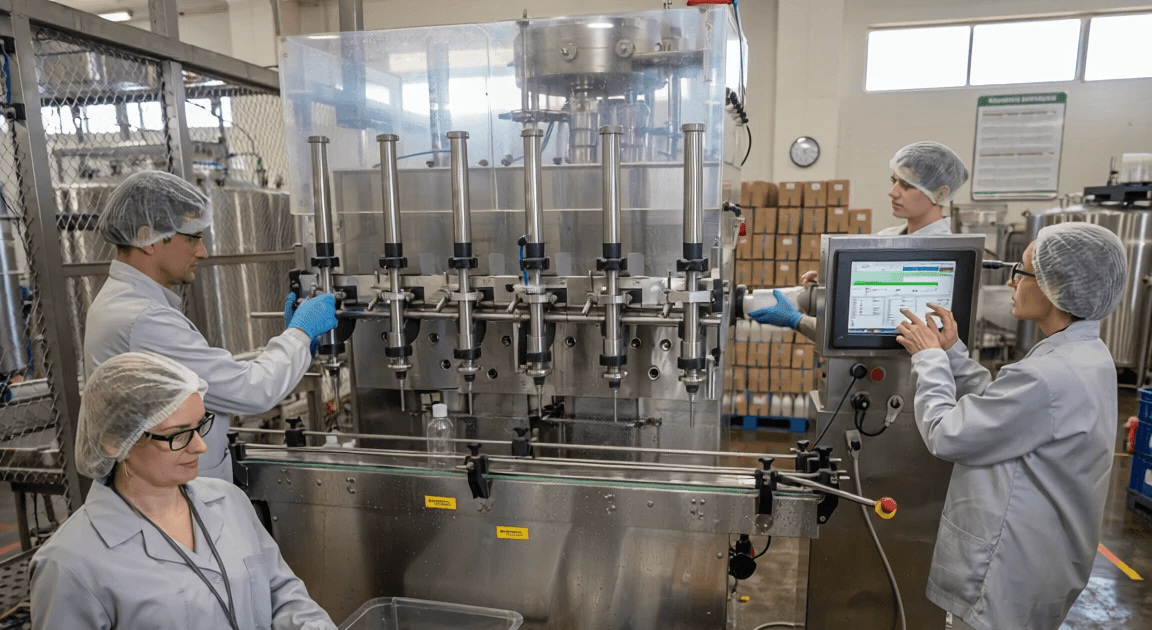
Setup labor in beauty manufacturing is fundamentally different from traditional overhead. Every product changeover requires specific, measurable tasks: cleaning fill lines, adjusting pumps and nozzles for different viscosities, calibrating fill weights, loading new packaging components, and running test fills.
These tasks scale with complexity, not time. A foundation shade change might require 12 minutes. A texture reformulation could demand 45 minutes. A packaging switch from dropper bottles to airless pumps takes 30 minutes minimum.
Setup Labor Definition: The direct labor time required to prepare production equipment and workspace for a specific product run, measured from the last good unit of the previous run to the first good unit of the new run.
The Bureau of Labor Statistics shows that manufacturing productivity gains have slowed to 0.9% annually, largely due to unmeasured inefficiencies like setup time that don't appear in standard productivity calculations.
The Real Cost Impact on Beauty Product Economics
Consider this scenario from a mid-size beauty contract manufacturer: A 500-unit batch of custom serum requires 35 minutes of setup labor at $28/hour loaded rate. That's $16.33 in setup cost, or $0.033 per unit.
Now scale it to a 150-unit batch of the same product for a smaller client. Same 35 minutes. Same $16.33. But now it's $0.109 per unit—more than triple the setup cost per unit.
This math compounds across your product mix. McKinsey research indicates that personalized beauty products command 20-30% higher margins, but only if manufacturers accurately capture the true cost of small-batch production.
The problem: Most beauty manufacturers spread setup costs across all products as overhead, masking the real profitability differences between high-volume foundations and low-volume custom serums.
Why Standard Labor Tracking Misses Setup Time
Most manufacturing execution systems (MES) start labor tracking when production begins—the first unit entering the line. Setup happens in the gap between jobs, often coded as "maintenance" or "changeover" time that gets allocated to overhead.
This creates three critical blind spots:
Product-specific setup costs are invisible: You can't see which formulations or packaging configurations drive higher setup requirements
Batch size optimization becomes impossible: You can't determine the minimum viable batch size for profitability
Client pricing lacks foundation: You're quoting based on production time alone, ignoring setup labor that scales with job frequency, not volume
A Deloitte study found that 73% of manufacturers lack real-time visibility into labor costs at the product level, with setup time being the largest contributor to this gap.
The Setup Time Measurement Framework
Effective setup labor tracking requires four measurement points:
1. Setup Start: When the previous production run completes and equipment prep begins
2. First Article: When the first test unit passes quality inspection
3. Setup Personnel: Which workers contribute setup labor (operators, mechanics, quality technicians)
4. Setup Tasks: Granular activities that drive setup duration
The framework captures both planned setup (scheduled changeovers) and unplanned setup (quality holds requiring line reconfiguration). Our breakdown of changeover labor inefficiencies shows how beauty manufacturers typically underestimate setup requirements by 25-30%.
Many beauty manufacturers find that setup labor represents 12-18% of total direct labor hours but only 3-5% appears in their cost accounting. The missing 10-15% gets buried in overhead allocation, making every product appear more profitable than reality.
Product Mix Implications for Margin Analysis
Setup labor tracking reveals which products actually generate profit versus which ones destroy margins through hidden costs. A typical beauty contract manufacturer sees three distinct profitability tiers:
Tier 1 - High Volume Standards: Foundation shades, basic moisturizers with minimal setup requirements. Setup cost per unit under $0.02.
Tier 2 - Medium Batch Custom: Specialized serums, custom shade matching with moderate setup complexity. Setup cost per unit $0.05-$0.15.
Tier 3 - Low Volume Specialty: One-off formulations, complex packaging, requiring extensive setup. Setup cost per unit above $0.20.
Without setup labor visibility, Tier 3 products appear profitable based on material margins but actually lose money when true labor costs are included.
Elements Connect's workforce intelligence platform captures setup labor at the task level, allowing beauty manufacturers to build accurate unit economics that include all labor components—not just direct production time.
Implementation Strategy for Setup Labor Tracking
Implementing setup labor measurement requires three operational changes:
Phase 1 - Define Setup Boundaries: Establish clear start/stop triggers for setup activities. Train floor supervisors to recognize setup versus maintenance versus downtime.
Phase 2 - Track Setup Personnel: Identify all workers contributing to setup tasks, including indirect labor like quality technicians running validation tests.
Phase 3 - Allocate Setup Costs: Build setup cost allocation into your cost accounting system, treating setup as variable cost tied to specific production runs.
The payback comes through better pricing decisions and product mix optimization. The workforce metrics that beauty manufacturers typically miss include setup efficiency, which directly impacts whether small-batch custom products generate positive contribution margins.
The Bottom Line on Setup Labor Economics
Setup labor isn't overhead—it's variable cost that scales with job complexity and frequency. Beauty manufacturers who treat it as overhead systematically underprice low-volume, high-mix products and make suboptimal decisions about minimum batch sizes.
The solution starts with measurement. You can't optimize what you can't see.
Frequently Asked Questions
What counts as setup labor in beauty manufacturing?
Setup labor includes all direct worker time spent preparing equipment and workspace for a specific product run: cleaning fill lines, adjusting pump settings for different viscosities, calibrating fill weights, loading new packaging components, and running test fills. It's measured from the last good unit of the previous run to the first good unit of the new run.
How much setup time is typical for beauty product changeovers?
Setup time varies by complexity: simple shade changes require 10-15 minutes, texture reformulations need 30-45 minutes, and packaging switches from droppers to pumps take 25-35 minutes. Most beauty manufacturers underestimate setup requirements by 25-30% when not tracking systematically.
Why doesn't my MES system capture setup labor costs?
Most MES systems start labor tracking when production begins—after setup is complete. Setup happens in the gap between jobs and often gets coded as "maintenance" or "changeover" time that's allocated to overhead rather than specific product costs.
What's the financial impact of not tracking setup labor?
Setup labor typically represents 12-18% of total direct labor hours in beauty manufacturing, but only 3-5% appears in cost accounting. The missing 10-15% gets buried in overhead allocation, making low-volume custom products appear more profitable than they actually are.
How do I calculate setup cost per unit for pricing decisions?
Divide total setup labor cost by batch size. For example: 35 minutes setup at $28/hour loaded rate = $16.33 setup cost. For a 500-unit batch, that's $0.033 per unit. For a 150-unit batch of the same product, it's $0.109 per unit—more than triple the setup cost per unit.