

Beauty Manufacturers' Changeover Labor Trap: Why Your Line Efficiency Metrics Don't Account for Prep-Time Waste
The 20-Minute Black Hole
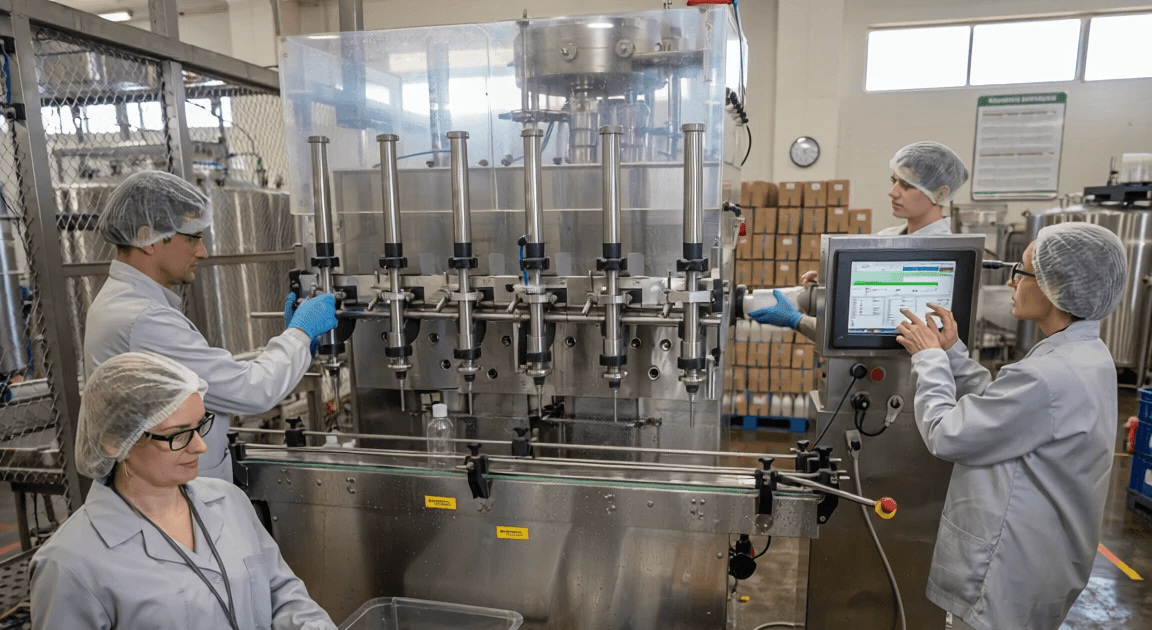
Walk any beauty manufacturing floor during changeover prep. Workers gather around Line 3 at 1:40 PM for a 2:00 PM changeover. Tools get collected. Materials get staged. The line supervisor reviews the setup sheet. Yet your MES doesn't start tracking until 2:00 PM when the official changeover begins.
That 20-minute window costs you $847 per changeover in a typical beauty contract manufacturing facility running 8 workers per line at fully loaded rates. Scale that across 12 changeovers per day, and you're hemorrhaging $10,164 daily in untracked prep time.
Prep-time waste is labor cost incurred during the unofficial changeover preparation phase that occurs before formal changeover tracking begins in manufacturing execution systems.
The beauty industry amplifies this problem. Color cosmetics require extensive material staging. Skincare lines demand thorough contamination prevention protocols. Personal care products need complex formula verification steps. Each category creates unique prep-time extensions that traditional efficiency metrics completely ignore.
Why Standard Changeover Metrics Miss the Target
Most beauty manufacturers track Single Minute Exchange of Die (SMED) or overall equipment effectiveness during changeovers. These metrics capture mechanical setup time, tooling adjustments, and first-good-part production. They miss the human element entirely.
Your changeover efficiency report shows 42 minutes average for lipstick shade changes. Reality check: labor allocation started 18 minutes earlier when workers began clearing the previous batch, sanitizing surfaces, and pre-positioning new raw materials. The Manufacturing Productivity Institute found that prep-time waste accounts for 23-31% of total changeover labor hours in personal care manufacturing.
Standard metrics also fail to account for skill-based prep variations. Your senior operator preps a foundation formula change in 12 minutes. New temps take 28 minutes for identical setup tasks. The efficiency gap compounds across shifts, but your KPIs treat all prep time as equal.
The Compounding Cost Structure
Prep-time waste follows a predictable cost structure that beauty manufacturers consistently underestimate. Direct labor represents only 34% of the total cost impact.
Indirect costs include quality technician time for pre-changeover testing, maintenance personnel staging specialized tools, and supervisory oversight during prep phases. A McKinsey analysis of CPG manufacturers revealed prep-time inefficiencies create downstream impacts worth 2.7x the immediate labor cost.
Seasonal beauty production amplifies these costs. Holiday makeup collections require 40% more changeovers than baseline periods. Valentine's Day fragrance runs create prep-time bottlenecks across multiple lines simultaneously. Your Q4 labor budget assumes standard changeover frequencies, but prep-time waste scales exponentially during peak seasons.
Our analysis of multi-line changeover coordination shows how prep-time visibility becomes critical when managing complex production schedules across beauty manufacturing facilities.
Hidden Inefficiencies in Beauty-Specific Changeovers
Color matching creates the most expensive prep-time waste in beauty manufacturing. Cosmetics lines require precise color verification before formal changeover initiation. Workers spend 8-15 minutes comparing shade cards, adjusting lighting, and validating color accuracy. This prep time never appears in changeover reports.
Formulation complexity adds another layer. Skincare active ingredients require temperature stabilization, pH testing, and viscosity checks during prep phases. Anti-aging serums with unstable compounds need 12-18 minutes of pre-changeover conditioning. Your efficiency metrics start counting after conditioning completes.
Packaging material prep represents the largest single category of hidden waste. Beauty products require extensive primary packaging preparation: pump mechanisms, applicator brushes, compact cases, tube assemblies. Workers spend significant time organizing, inspecting, and positioning these components before official changeover begins.
Measuring What Matters in Changeover Labor
The solution requires tracking labor allocation from prep initiation to first good production unit. Elements Connect enables beauty manufacturers to capture complete changeover labor cycles, including pre-changeover preparation phases that traditional systems ignore.
Real changeover labor efficiency equals total productive changeover time divided by total labor hours allocated from prep start to production restart. This metric reveals the true cost of line transitions and identifies specific improvement opportunities.
Tracking worker-level prep performance creates accountability for changeover preparation tasks. Your data shows Operator A consistently completes foundation prep in 14 minutes while Operator B requires 23 minutes. Skill gaps become visible and addressable through targeted training.
Building Accountability Into Prep Time
Establish clear prep-time standards for each product category. Color cosmetics prep should complete within 16 minutes. Skincare formulation prep targets 22 minutes maximum. Personal care packaging prep finishes in 12 minutes or less.
Create prep-time visibility through real-time dashboards. Plant managers need immediate alerts when prep phases exceed standard durations. Line supervisors require worker-level prep performance data to address inefficiencies before they compound.
Our research on per-worker performance tracking demonstrates how granular labor data transforms changeover management in manufacturing environments.
Implement prep-time optimization incentives. Reward crews that consistently complete prep phases within standard times. Track prep-time improvements monthly and tie results to shift-level performance bonuses.
The Real ROI of Changeover Labor Intelligence
A mid-size beauty contract manufacturer running 24 changeovers daily discovered 31% of their changeover labor costs occurred during untracked prep phases. Implementing comprehensive changeover labor tracking reduced total changeover time by 19% within six months through improved prep-time management.
The financial impact extends beyond direct labor savings. Faster changeovers enable more SKUs per shift, improved customer service levels, and reduced inventory holding costs. Beauty manufacturers with optimized changeover processes achieve 12-18% higher overall equipment effectiveness during peak production periods.
Vendor consolidation becomes possible when prep-time visibility reveals true changeover costs. You discover that SKU A requires 28% more prep labor than SKU B due to packaging complexity. Pricing discussions with brand partners become data-driven rather than gut-feel negotiations.
Implementation Without Production Disruption
Start by shadow-tracking prep time on two production lines for 30 days. Document actual prep start times, worker assignments, and task completion sequences. Compare shadow data against official changeover logs to quantify the gap.
Introduce prep-time tracking gradually across shifts. Begin with day shift implementation, validate accuracy, then extend to evening and overnight crews. Avoid disrupting established changeover routines during initial rollout phases.
Train supervisors to recognize prep-time waste patterns. Early worker arrival doesn't always indicate prep efficiency. Workers standing idle during material staging signals process gaps that require immediate attention.
Moving Beyond Efficiency Theater
Your changeover reports look impressive, but they're measuring the wrong metrics. True changeover efficiency includes every minute of labor allocation from prep initiation through first good production. Beauty manufacturers who track complete changeover cycles reveal 20-35% more optimization opportunities than facilities measuring setup time alone.
Stop accepting prep-time waste as an inevitable cost of beauty manufacturing complexity. Start tracking labor allocation throughout complete changeover cycles to unlock millions in hidden savings.
Frequently Asked Questions
What counts as prep time in beauty manufacturing changeovers?
Prep time includes all labor activities that occur before official changeover tracking begins: material staging, tool collection, line clearing, sanitization, worker briefings, and quality setup verification. In beauty manufacturing, this typically adds 15-25 minutes to each changeover but often goes untracked by standard MES systems.
How much does prep-time waste typically cost beauty manufacturers?
Prep-time waste averages $847 per changeover at fully loaded labor rates in beauty contract manufacturing. For facilities running 12 changeovers daily, this equals $10,164 in daily untracked labor costs, or approximately $3.7 million annually in a 365-day operation.
Why don't standard changeover metrics capture prep time?
Most MES and ERP systems begin changeover tracking when operators initiate the formal setup sequence, missing the preparation phase entirely. SMED and OEE calculations focus on mechanical setup time and equipment performance, not labor allocation during pre-changeover activities that beauty products require.
What makes beauty product changeovers more complex than other manufacturing?
Beauty manufacturing requires extensive color matching, formulation stability checks, contamination prevention protocols, and complex packaging component staging. Color cosmetics need shade verification, skincare requires pH and viscosity testing, and personal care products demand multiple packaging component preparation steps that extend prep phases significantly.
How can beauty manufacturers start tracking prep time without disrupting production?
Begin with shadow tracking on 2-3 production lines for 30 days, documenting actual prep start times versus official changeover logs. Implement gradual rollout starting with day shift, train supervisors on prep-time waste recognition, and establish clear prep-time standards for each product category before expanding to all lines and shifts.